Second Act
Dear Doctor,
Our founder retires next year, and we have a bit of a problem. His reputation is our reputation. We have a plan for transitioning the ownership of the firm, but we have no plan for the day he walks out the door and clients still ask for him or, worse, want to go with him. How do we set the table for the next generation of leaders, so the firm doesn’t disappear when he leaves?
—Second Act
My dear Second Act,
Have you ever invited everyone over for Thanksgiving, looked at the clock, realized your guests are arriving in an hour, and you haven’t put the turkey in the oven yet? (The Doctor hasn’t, because she’s a Capricorn, and she plans that day weeks in advance, right down to the cranberry sauce.) But unfort, my dear Second Act, you’re not the Doctor. If you were, you’d be writing this column, not reading it!
Ok, back to business. Plenty of firms treat a founder’s retirement the same way, by waiting until the very last minute. When the doorbell rings, they throw the turkey into the oven, cross their fingers and pour themselves a drink. I don’t know if you cook, Second, but that’s a recipe for ordering pizza, not for success.
First, a little history lesson, because the Doctor can’t help herself (PhD, remember?). Do you think any clients hire SOM because of Louis Skidmore? That’s rhetorical, of course; the answer is none, nada, zilch! But you do know that clients hire Skidmore, Owings & Merrill, which is still very much alive and well 90 years after Skidmore and Nathaniel Owings started their firm in a Chicago attic. Likewise, when Gene Kohn, Bill Pedersen and Sheldon Fox started KPF in 1976, they said they wanted to build “something bigger than the three of us that would live longer than any of us,” and they did. Point is, Second, many firms have outlasted their founders, and you can, too!
Now, Second, any good doctor will tell you that the best cure starts with prevention. Meaning, you can’t wait until your founder has a daiquiri in one hand and a golf club in the other. You’ve got a year, which sounds like forever and goes by faster than a Ferrari. So get your mojo on, my dear Second.
So, here’s my daily dose, and let’s be crystal clear. You don’t want to be your founder (which would be impossible, unless you have a cloning machine tucked into a corner of your office, which the Doctor seriously doubts), but you want to be like him.
The gazillion-dollar question is, what’s that secret sauce? First thingy you need to do is find out why your clients hire him (and your firm). Clients are people who hire other people, after all. The good news is that the Doctor can show you how to find that out. (Side note, this is like, Branding 101, so if you don’t know this, you should. What’s a brand? It’s what people say about you when you’re not in the room.)
Now set aside an afternoon and call five of your best clients and ask them three things: Why did you hire us once, twice, three times? Why would you hire us again? What would make you nervous about working with us without him? (Hopefully they pick up when you call. If not, nudge them politely until they do. And when you meet, take notes, lots of them.)
Next, become a stalker. Well, not reaaaally, but your next leaders need to follow this guy around from now on like ducklings trailing behind their mother. Don’t let him go out alone either. By that the Doctor means that he should bring one of the firm’s rising stars to every meeting and let him or her make the presentation, do the intros, deliver the big finish, and answer the nasty questions that invariably come up. Same goes for the press, so give someone else the key quote (with good media prep beforehand, of course). And for heaven’s sake, make sure the emerging leaders are prominent on your website, and their headshots are newer than your high school yearbook.
Ok, now for the tricky part, and you know the Doctor always gives you the spoonful without the sugar, but with plenty of love. You gotta get your founder on board, because we all know that many of them say they want to step back but instead, they lean forward (yeah, you know the type). He has to let people make mistakes and do things differently than he would have, and he can’t second-guess them when he passes by their desks on the way to make his morning espresso. ‘Cause if he can’t let go, the firm’s reputation walks out the door with him.
Look, Second, you don’t need to announce this change to the whole wide world, but don’t keep it a secret, either. Let clients and colleagues know who will be taking over what and when. Find the founder a role, like a few legacy clients, a philanthropic project or his archive, anything that keeps him from hovering around like a helicopter.
Last but not least, document his recipes for winning work, building client relationships, and managing teams. When your team can cook his signature dish without him in the kitchen, you own it, Second.
Now go preheat the oven, Second Act. The Doctor is starving.
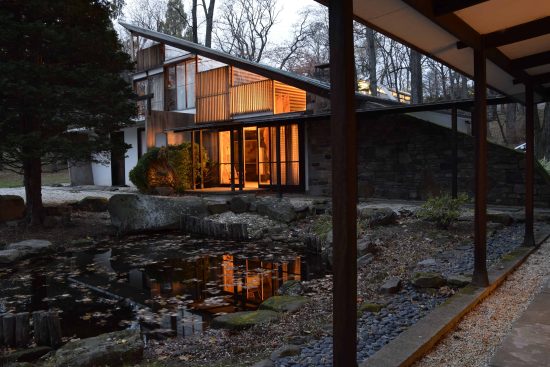
Haus Call: Trained as an architect but best known for his beautiful furniture, George Nakashima built his home and studio in New Hope, Pennsylvania between 1946 and 1977. He designed more than a dozen buildings on the property, including his home, the Conoid Studio. The compound is now a National Historic Landmark. Since Nakashima’s death in 1990, his daughter Mira has led the studio, which still produces furniture designed to her father’s specifications. Fun fact: Nakashima built the first structures on the land in exchange for rent.